Former Unit of Brahmo Samaj Education Society
NAAC Re-Accredited B+ College, RUSA 2.0 Grant
ISO Certified - 9001:2015

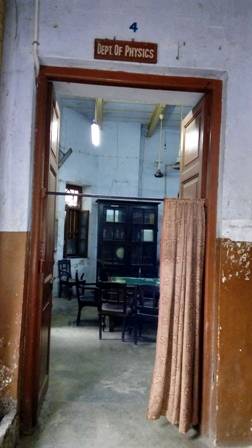
The Department of Physics of Rammohan College started in 1961 and since then it has been continually engaged itself for delivering good students to the society. The best measure of our Physics Department is the success of our students, in their respective pursuits after graduation. In recent years a majority of the students have passed out with good percentages. Many of them after doing graduation join in different universities for post graduation in Physics and Electronics. Apart from this a few students have cleared National Entrance Examinations like JAM, JEST etc. A number of students have been engaged in active research in different reputed universities of India and abroad. Several others have joined in reputed schools as teachers. A few of the departmental teachers are engaged in active research and have published a no of papers in reputed international journals.
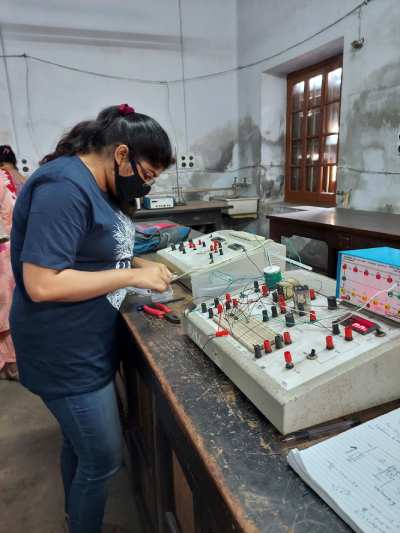
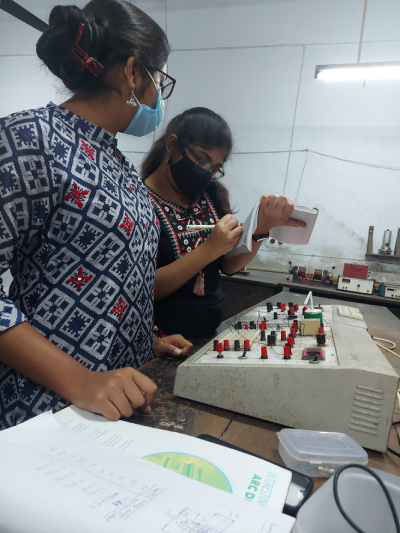
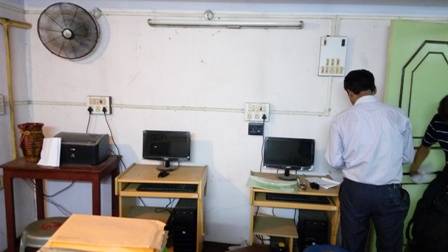
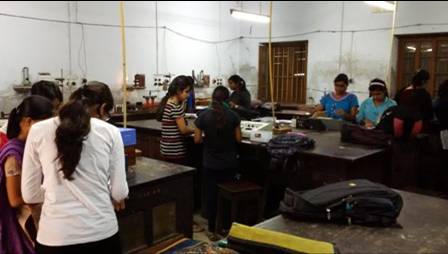
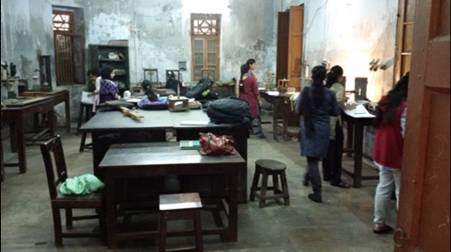
The Department has two Honours labs and two General labs. Apart from this the Department has a computer lab for teaching programming languages as per the curriculum of the University. The Department also has a small Seminar Library for providing necessary text and a few reference books to the students.
The College has two large room labs (room no 7 & 9) for the B.Sc general students. Majority of the experimental set ups in this lab is shared with other colleges but a few set ups are solely maintained by the department. There is another lab for 3rd year general students (room no. 3). All the experimental set ups in this lab is solely maintained by the department.
Apart from the Central library, the department possess a small seminar library comprising of about 160 books. Some of the books are borrowed from the central library but majority of the books are property of the department itself. A separate accession numbers are given to these books of seminar library. The Honours students of all the years are entitled to use these books. The departmental seminar library stock register and the issue register is maintained regularly.
| General | SC | ST | OBC A | OBC B | Total |
| 26 | 08 | 02 | 04 | 03 | 43 |
Number of students admitted in M.Sc. in the year 2022:-04
Number of Ex students got an employment/job in the year 2021- 2022:-03
Average salary of the employed Ex students:-20000/- per month
Number of books/papers published from the Department in 2021-2022:-05
Any award/project received by the teachers/students of the Department in the year 2021-2022:-Nil
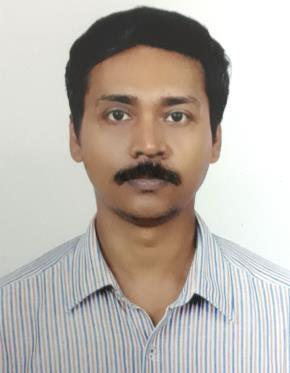
saudutta@gmail.com, saudutta@rammohancollege.ac.in
M.Sc, Ph.D.
View Details
ranajitmandalphys@gmail.com, ranajitmandal@rammohancollege.ac.in
M.Sc, Ph.D.
View Details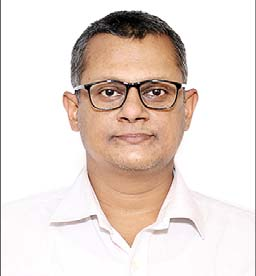
dibakardutta@rammohancollege.ac.in, dibakar.dutta@gmail.com
M.Sc, Ph.D.
View Details| SL NO | SUBJECT | VIEW / DOWNLOAD |
|---|---|---|
| 1 | B.Sc. CBCS syllabus Physics | |
| 2 | CCF-2022 | |
| 3 | CCF sem 3- sem 6 syllabus |
| Sl No | Title | View |
|---|
| Sl No | Title | View |
|---|
| Sl No | Date | Title | View |
|---|
| Sl No | Title | View |
|---|
List of Laboratory Instruments in Physics (Hons.) Lab
| Semester | Name of Laboratory Instrument | No. of Instrument |
| I | Moment of Inertia of a metallic cylinder / rectangular bar | 1 |
| I | Moment of Inertia of a Flywheel. | 1 |
| I | Searle’s dynamic method. | 1 |
| I | Value of g using Bar Pendulum. | 1 |
| I | Vertical height using sextant. | 1 |
| I | Young’s modulus by the method of flexure. | 1(Shared) |
| II | Unknown Low Resistance using Potentiometer | 1 |
| II | Unknown Low Resistance using Carey Foster’s Bridge | 1 |
| II | Series LCR circuit | 2 |
| II | AC characteristics of a series RC Circuit | 2 |
| II | Mutual inductance | 1 |
| II | Magnetometer | 1 |
| II | Melde’s experiment | 1 |
| II | Refractive index of the material of a prism | 1 |
| II | Fresnel Biprism | 1 |
| II | Newton’s Rings | 1 |
| II | Interference fringes produced by a wedge-shaped Film. | 1 |
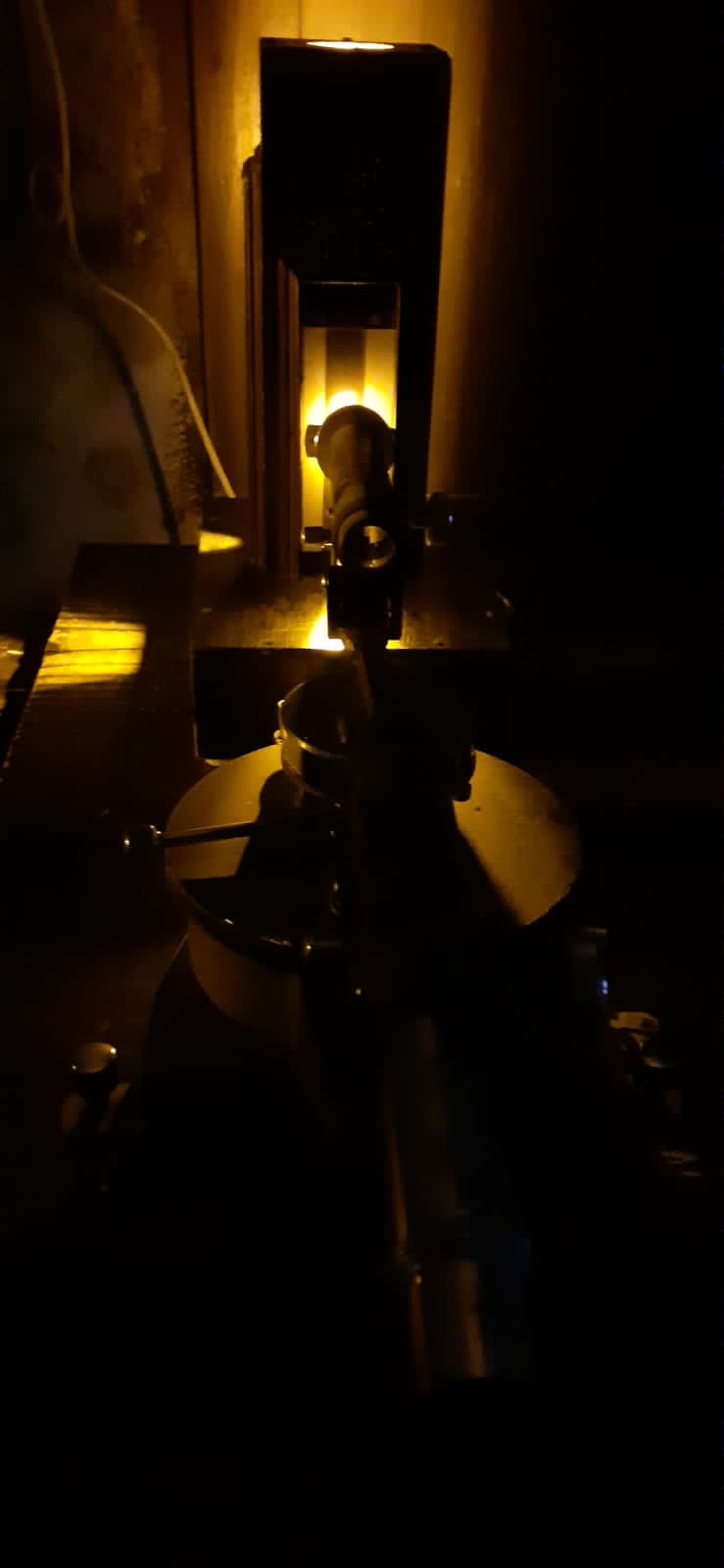
| II | Grating spectra | 1 |
| III | Optical lever | 1(shared) |
| III | Platinum Resistance Thermometer (PRT). | 1 |
| III | Plank constant using LED | 1 |
| III | Stefan’s law of radiation | 2 |
| III | e/m of electrons by using bar magnet. | 1 |
| III | I-V characteristics of tunnel diode | 1 |
| IV | Zener diode | 2 |
| IV | Static characteristics of BJT in CE Configuration | 1 |
| IV | CE amplifier | 1 |
| IV | Series regulated power supply | 1 |
| IV | OP-Amp | 2 |
| IV | Wien bridge oscillator | 1 |
| V | Fresnels law by the reflection on the surface of a prism | 1 |
| V | Malus law using a pair of polaroids. | 1 |
| V | Specific rotation of optically active solution using polarimeter. | 1 |
| V | Dispersive power and resolving power of a diffraction grating | 1 |
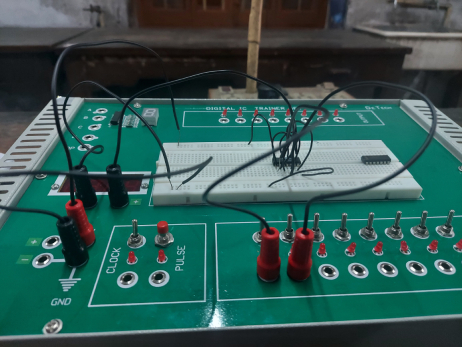
| VI | Digital Electronics practical | 5 |
| VI | BH hysteresis of ferromagnetic material | 1 |
| VI | Dielectric constant of different materials | 1 |
| VI | Band gap using linear four probe. | 2 |
| VI | Hall voltage by four probe method | 1 |
| VI | Temperature Controller | 1 |
| I,III,IV,V | Python programs using computer | 6 |
 Undertaking Registration form for Colleges